Save 10% on your first iridology analysis in 2026 with promo code: NEW2026

news
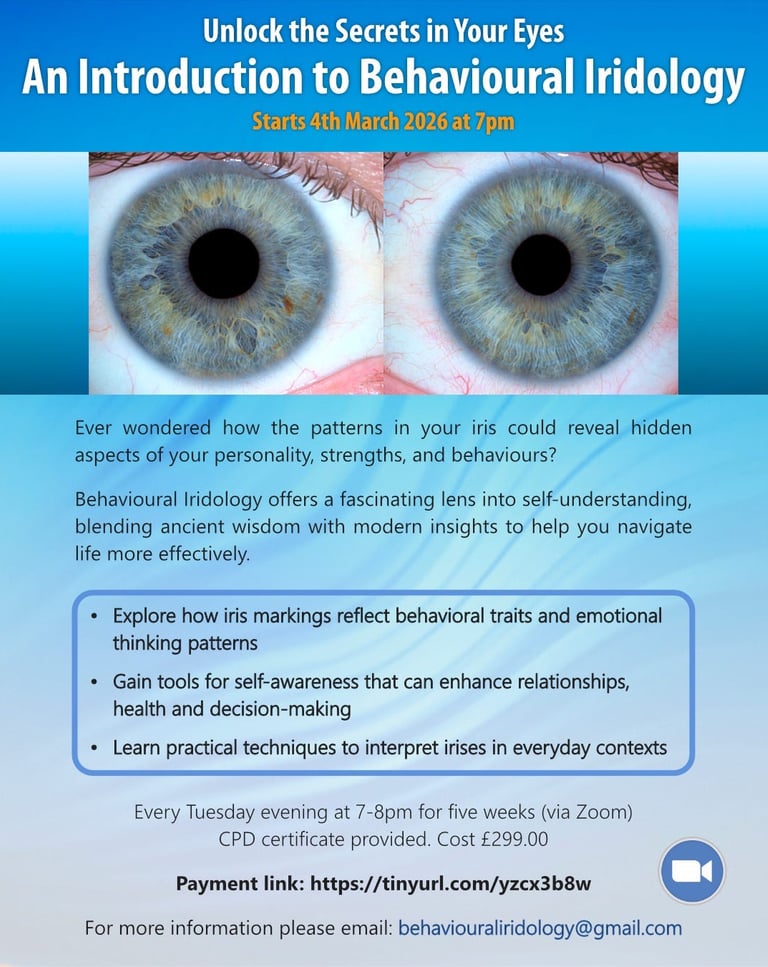
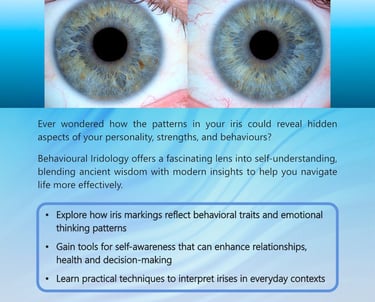
Would you want to learn Behavioural Iridology?
Equip yourself with the best tools to help your clients on their discovery or healing journey by learning what iridology has to say when it comes to emotions and behaviours.
Andrew Mason is brilliant teaching this course. You'll love it!
The next class will start Tuesday March 4th 2026 at 7pm
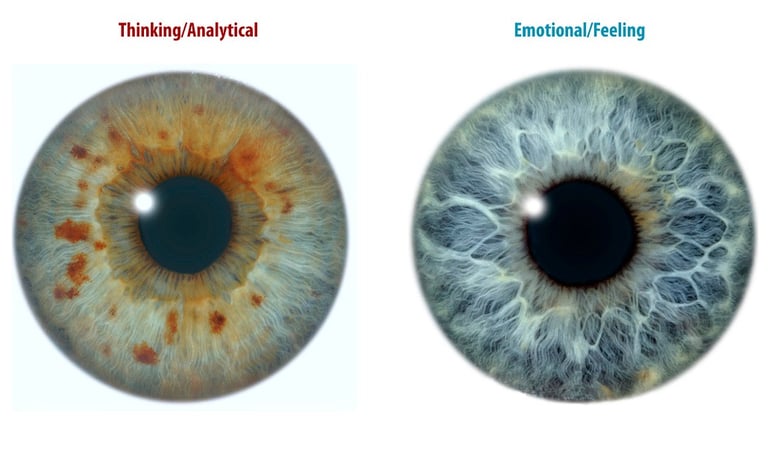
Discover Behavioural Iridology
An Introductory 5-Week Course Join this structured five-week introduction to the Behavioural model of iridology, where you’ll explore how the unique patterns in the iris reflect personality traits, emotional tendencies, and behavioural strengths.
Duration & Format: 5 weeks, 1 hour per session (total 5 hours)
Schedule: Starts Wednesday 4 March 2026 at 7:00 pm, continuing every Wednesday
What’s included: All course materials provided as PDFs
Interactive element: Live Q&A at the end of each class
Certification: CPD certificate awarded on completion
This is an ideal starting point for anyone curious about how iris analysis can offer deeper self-understanding and practical insights into behaviour and relationships.
For full details or to reserve your place, email: info@behaviouraliridology.com

Parasites, those silent invaders
Parasites ~ IRIDOLOGY
These silent invaders are organisms who benefit from nutrition and shelter by living on another organism causing damage to the host. Parasites are the underlying problem of practically every major health problem today.
Today, probably more so than at any other time in history, chronic and degenerative diseases are virtually epidemic — cancer, Epstein Barr, HIV, fibromyalgia, chronic fatigue syndrome, diabetes, lupus, and many more. The list continues to grow, but the true cause of most of these problems still isn’t being addressed. During the rapid growth of these conditions the spread of parasites and yeast has also been extensive. More and more is being revealed about the poor water purification and continuous outbreaks of parasitic-related illness. The extensive use of antibiotics has helped spread yeast throughout the population. Most people don’t really have a grip to the severity of these two predators. Many think that only animals have parasites and that yeast is the stuff they put into bread to make it rise. Although we used to believe that parasites were rare except in foreign countries or the tropics, it is now known that parasitic infestation is a major cause of illness in most western countries.
Parasitic disorders aren’t as rare as we would like to think; in fact, the growing number of such disorders is quite alarming. It has been reported that one of six people will test positive for parasites. The reality most people have to live with nowadays.
Parasites can be divided into two categories:
1: worms (round, whip, fluke, hook, tape, thread and pin)
2: protozoa (single-cell animals known as amoeba, giardiasis, toxoplasma, cryptosporidium, etc.)
These hidden invaders take up residence in your body. They share your food and release waste into your bloodstream.
What Parasites do to our Bodies
Parasites irritate the tissues of the body, produce harmful toxins, destroy cells in the body faster than cells can be regenerated and depress the immune system. Some parasites penetrate through the skin, others can create an obstruction in the body. People can harbour cysts or larvae for many years. Parasites mimic other diseases, such as arthritis, heart problems and even tumours, and often the health problem is misdiagnosed. If these uninvited guests invade the pancreas, diabetes may become a health problem.
How did we Become Hosts
Parasites can invade our bodies in a number of ways. One way is through contaminated food or water. Another way is through smoother agent. Such a mosquito, a flea, sand fly. Animals and pets are another source since parasite can be passed from organism to organism.
There are some 240 infectious diseases transmitted by animals to humans. These hidden invaders can be spread through direct contact with infected faeces. Man-made ponds and lakes are breeding places for parasites. Parasites can be passed through sexual contact, and some enter the body through the nose and skin. In addition, the overuse of antibiotics and immune suppressing drugs reduces friendly intestinal bacteria and weakens the body’s defences against these hidden invaders.
Symptoms Parasites Produce
Parasitic symptoms are many and varied, some of which are:
Sugar and/or alcohol cravings
Teeth grinding
Chronic cough
Gas and bloating
Irritable bowel syndrome
Joint and muscle aches and pains
Anemia
Poor nail quality (weak, brittle, white specs)
Cracks around mucous membrane like the nose (ears, eyes, rectum, vagina)
Allergies, Skin conditions (rashes and itching)
Itchy around anus
Abdominal pain
Nervousness (toxic waste can intensify the nervous system)
Sleep disorders (insomnia, as parasites are in full swing at midnight)
Feelings of something crawling under the skin
Chronic fatigue/extreme tiredness
Reoccurring sores and rashes
Nausea & Flu symptoms
Deficient Immune System
Diarrhoea and even Constipation.
Parasites living in the upper small intestine can cause gas and bloating. parasites secrete toxic metabolic waste. Parasites can irritate the intestinal wall, causing bowel cramps, gallbladder pain, fevers, and even Crohn’s disease (parasites in the middle lining of the intestine).
Parasites and the toxins they produce can cause allergy symptoms. Skin reactions, such as hives, rashes, eczema, ringworm, jock itch and athlete’s foot can be caused by parasites.
Wastes and toxic substances from parasites can irritate the nervous system, causing hyperactivity, attention deficit, memory problems and panic attacks.
Teeth grinding and thrashing in bed are common symptoms of parasitic activity, especially in children. Parasites can become enclosed in a sac in joint fluids and worms can harbour in the muscles, causing rheumatoid and arthritic symptoms, even fibromyalgia (parasites in the muscles). Chronic fatigue symptoms can be the result of parasitic activity in the body.
The end result of parasitic activity is a depressed immune system.
How We Rid the Body of Parasites
First, since the immune system is now deficient from parasitic activity, the immune system should be supported through natural supplementation. Some suggested natural immune system builders might be: ginseng, kelp, sumatriptans combination, Pau D’Arco, cat’s claw or Essiac tea.
Second, an effective natural parasite elimination program should be undertaken: Black walnut, herbal pumpkin, garlic, elecampane, mugwort, and wormwood have been used successfully for parasite elimination. It is essential to keep the bowels moving during a parasite elimination program. Cascara Sagrada could be added to the elimination program.
Last, it is wise to create an environment in the body in which parasites cannot live. This can be done as follows:
Keep the balance of friendly bacteria in the intestinal tract at 80% lactobacillus acidophilus and 20% the unfriendly bacteria.
The diet should be modified. Parasites thrive on sweets and simple carbohydrates, including fruit juices. Refined sugar should be eliminated from the diet. Reduce dairy product intake in the diet. Eat unprocessed, high fibre foods.
Further, parasites cannot normally survive if the stomach has adequate hydrochloric acid. As we age, production of hydrochloric acid decreases. Enzyme supplementation may also be beneficial as well as supplement the body with natural minerals such as alfalfa or kelp.
Once the parasite elimination program has been completed, steps should be taken to prevent parasite infestation as follows:
Maintain adequate hydrochloric acid, enzyme, mineral and acidophilus levels in the body. Maintain a diet low in sugar and dairy products. Eat high fibre foods such as grains, beans, vegetables. Avoid drinking water from streams and rivers, as well as eating raw beef or raw fish. Avoid antibiotics and cortisone/steroid-type drugs. Make sure you are eliminating regularly. Use good hygiene and wash your hands often through out the day.
These uninvited guests are the silent epidemic in today’s world.